Picture this: It’s Saturday morning at 8:00 AM. You want to sleep in, but you are violently woken up by the deafening roar of a gas-powered lawn mower. It’s the landscaping crew at your neighbor’s house.
You look out the window and see three guys sweating, breathing in gasoline fumes, and making a racket. Then, you remember that you pay that exact same company $50 a week to do that to your yard. Over a 6-month summer, you are handing them over $1,200, and over a few years, you’ve spent the price of a used car just to have someone cut your grass.
The landscaping industry thrives on your hatred of yard work. They convince you that maintaining a lawn requires heavy, smelly gas machines and hours of back-breaking labor. But the dirty truth is, mowing the lawn is easier than vacuuming your living room. You just need the right machine. Here is the dirty truth about yard care, and how to do it yourself for pennies:
The “Gas Engine” Maintenance Nightmare People think they need a $400 gas mower because “that’s what the professionals use.” This is a trap. Gas mowers require you to buy gasoline, change the oil, replace spark plugs, and clean air filters. If you leave gas in it over the winter, the carburetor clogs, and the mower won’t start in the spring. You will spend more time fixing the machine than actually cutting the grass.


The “Scalping” Mistake When people finally do mow, they set the blades as low as possible so they don’t have to mow again next week. This is called “scalping,” and it destroys your lawn.
- The Free Hack: Set your mower to the highest setting. Cutting only the top third of the grass blade shades the soil, preventing weeds from sprouting and locking in moisture. Taller grass grows deeper roots, meaning it survives droughts without you paying for extra sprinkler water.
- The Extra Benefit : Letting your grass grow slightly longer naturally suffocates out dandelions and crabgrass. You eliminate the need to buy $40 bottles of toxic weed killer, and your lawn looks greener and lusher than the artificial-looking, scalped lawns of your neighbors.
The “Bagging” Illusion Landscapers love to bag your grass clippings and haul them away. It looks neat, but it’s actually robbing your lawn of free fertilizer.
- The Smart Fix: Take the bag off your mower and let the clippings fall back onto the grass. These clippings break down in 48 hours, releasing nitrogen and water directly back into the soil. It is nature’s free, automatic fertilizer.
- The Extra Benefit : By mulching your clippings, you cut your need for chemical fertilizers by 50%. You save $100 a year on lawn food, and you stop filling plastic bags with yard waste that ends up in landfills.
The Cordless Electric Revolution If you hate the smell of gas and the pain of a pull-cord, there is a modern miracle waiting for you.
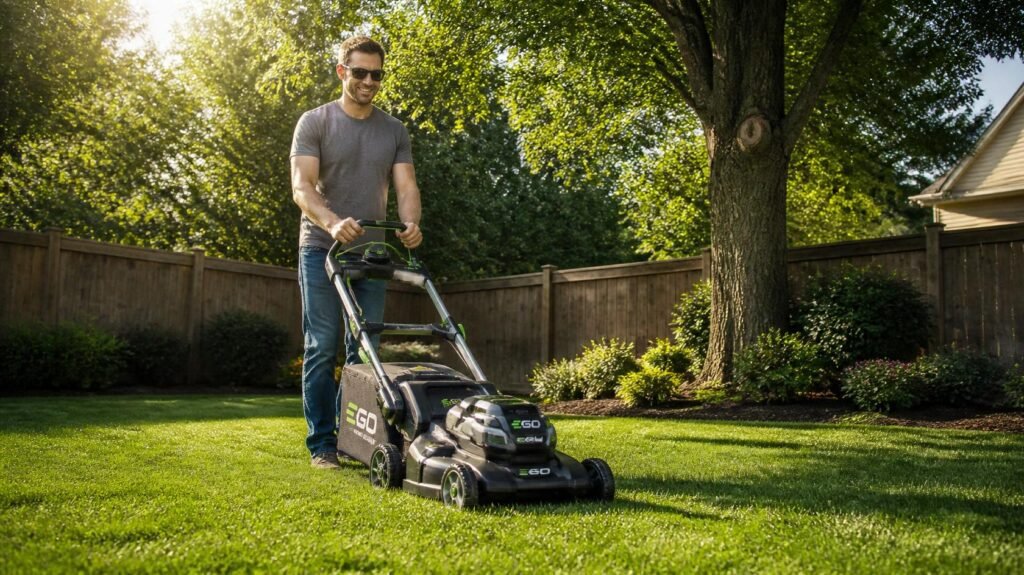
- The Smart Move: A Cordless Electric Lawn Mower is the ultimate cheat code. It looks like a normal mower, but it runs on a rechargeable battery. You push a button, and it starts instantly. It is whisper-quiet, weighs half as much as a gas mower, and produces zero emissions. You can mow your lawn at 7:00 AM on a Sunday without waking your neighbors. It completely eliminates the need for a $50/week landscaping crew. (If you want to see which electric mowers actually have the battery life to finish a whole yard, check out our review of the best budget cordless electric lawn mowers!)
- The Extra Benefit : An electric mower has zero fluids to leak. You can store it vertically against the wall of your garage, taking up half the space of a bulky gas mower. Plus, the battery you buy for the mower is interchangeable with electric leaf blowers and string trimmers, building you a complete, gas-free yard toolkit.
The Bottom Line Stop paying a landscaping crew $1,200 a summer to breathe gas fumes in your yard. Raise your blade, mulch your clippings, and upgrade to a cordless electric mower. You can mow your lawn in 15 minutes of peace and keep your money in the bank.
Disclosure: This post contains affiliate links. If you click through and make a purchase, we may earn a small commission at no extra cost to you. We only recommend products we genuinely believe offer great value.