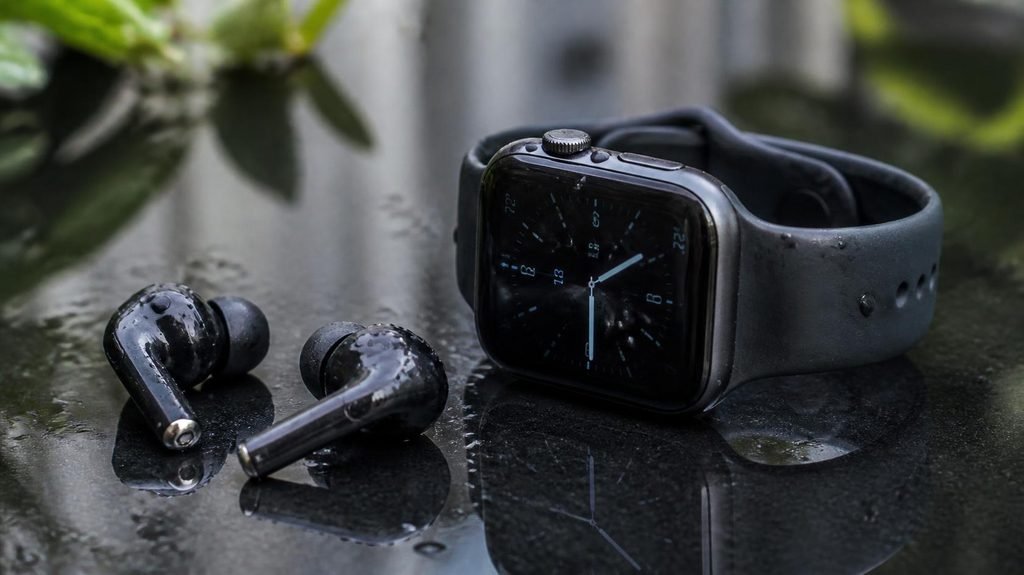
You’re shopping for earbuds, a smartwatch, or a phone. One box says IPX4. Another says IPX7. The expensive one says IP68. These two little letters decide whether your gadget survives a pool party — and almost nobody knows what they mean. Here’s the plain-English decoder.
What “IP” stands for:
IP means Ingress Protection — how well the device seals out the outside world. It’s always followed by two digits:
- First digit = protection against solids (dust, dirt)
- Second digit = protection against liquids (water)

- Designed with a bright, colorful AMOLED display, get a more complete picture of your health, thanks to battery life of u…
- Body Battery energy monitoring helps you understand when you’re charged up or need to rest, with even more personalized …
- Get a sleep score and personalized sleep coaching for how much sleep you need — and get tips on how to improve plus key …
What each rating actually promises:
IPX4 — Protected against splashes. Sweat, rain, the shower if you’re lucky. It is NOT submersible. Drop it in the sink and it’s likely gone.
IPX7 — Survives full submersion in 1 meter of fresh water for 30 minutes. Drop it in the pool? Fish it out, dry it, keep using it. But it is not designed for swimming — continuous movement underwater exceeds the rating.
IP67 — Dust-tight (zero dust enters) plus the same 1-meter submersion protection as IPX7. If you work somewhere dusty — construction, workshops, beaches — that first digit is the one you’re paying for.
IP68 — Dust-tight plus deeper submersion, typically 1.5 to 3 meters (the exact depth is set by the manufacturer, not the standard). This is the rating on flagship phones.
The X means “not tested” — a device rated IPX7 was never tested for dust, which doesn’t mean it fails; it means the manufacturer skipped that test.
Four traps the box won’t tell you:
1. Pool and ocean water aren’t the lab test. Ratings are measured in fresh water. Chlorine and salt water corrode seals faster — if your device goes in the ocean, rinse it with fresh water afterward.
2. Showers and saunas don’t count. The ratings cover submersion in cool liquid. Hot water and steam are explicitly excluded — steam molecules slip past seals that block liquid water. Your “waterproof” speaker is not a sauna speaker.
3. Water damage usually voids the warranty. Read the fine print on any IP68 phone: the rating is a survival claim, not a guarantee. Liquid damage is almost never covered by warranty — even on $1,000 phones. The rating protects the product’s reputation, not your wallet.
4. Seals age. A 3-year-old device with IP68 is meaningfully less water-resistant than the day it left the factory — gaskets dry out and compress over time. Treat old devices more gently than their box claims.

- 【2026 New Bluetooth 5.4 Calls & Smart Notifications】 Built with an advanced microphone and HD speaker, the mens watches …
- 【30+ Day Ultra-Long Battery Life】 Powered by a high-capacity 1000mAh battery and an efficient low-power chip, the watche…
- 【All-Day Wellness Tracking】 Stay connected to your body’s natural rhythms. The KIPTUMTEK Y8 tracks your heart rate trend…

- 1.83″ Touch Screen & 100+ Dials: Elevate your style with a smart watch that looks as good as it performs. The vibrant di…
- 24/7 Health Monitoring & Smart Reminders: Designed exclusively for women’s daily health care, recording female menstrual…
- Bluetooth Call & Smart Notification Center: Stay connected and in control with the T7 smart watch that delivers crystal-…

- Easy-to-use running smartwatch with built-in GPS for pace/distance and wrist-based heart rate; brilliant AMOLED touchscr…
- Up to 11 days of battery life in smartwatch mode and up to 19 hours in GPS mode
- Reach your goals with personalized daily suggested workouts that adapt based on performance and recovery; use Garmin Coa…
Quick shopping reference:
- Workout earbuds: IPX4 minimum (sweat), IPX7 if you want accident-proofing
- Everyday smartwatch: IPX7 fine; for actual swimming look for a 5ATM rating instead — that’s the watch-industry depth standard and matters more than IP
- Phone: IP67/68 is nice insurance against accidents, but remember trap #3
Rule of thumb: IPX7 means accident-proof. IP68 means slightly more accident-proof. Neither means “go swimming with it.”
Disclosure: This post contains affiliate links. If you click through and make a purchase, we may earn a small commission at no extra cost to you. We only recommend products we genuinely believe offer great value.